Start small. Stay safe. Scale.
"AI is a productivity and thinking accelerator - not a substitute for professional judgement." - Timothy Gauci, Design and Diplomacy Director

12 May 2026
It may be best known for its popular holiday destinations, but the Sunshine Coast of Queensland is also a thriving manufacturing hub that makes a real contribution to the local economy.
In fact, if you’ve ever bought banana bread or a pavlova from a major Australian supermarket, there is a strong chance it was baked in the region. Likewise, if you’ve purchased pool fencing from major hardware stores around Australia, it may have been “Made on the Sunshine Coast”.
Tim Kelly from the Manufacturing Excellence Forum (MEF), a Sunshine Coast not-for-profit group, says the success of local firms shows why Australia needs to encourage more manufacturing across the country.
“The manufacturing sector is the Sunshine Coast’s biggest exporter and its third-largest sector by economic output. The 1500 manufacturers in our region employ 11,000 people across diverse businesses,” Tim says.
“There are manufacturers involved in aerospace, mining, high end caravan production, helicopter fit outs, defence solutions and other industries too.”
Reflecting on Australian Manufacturing Week in Brisbane from May 12 to May 14, Tim says a stronger nation-wide manufacturing sector would increase Australia’s “economic complexity” by increasing the diversity of its key industries. This would have the twin advantages of creating opportunity and building our economic resilience – particularly in a world in which global uncertainty is increasingly the norm.
“The lack of diversity in our industry base is problematic. We rely too heavily on comparative advantage as a macroeconomic concept, and as a result, we don't have enough strategic capability or sovereign capability,” he says.
“Manufacturing is vital to local economies and Australia’s long-term growth. That’s why NAB partners with groups like MEF” says Nikolle Mauchline, Region Manager Wide Bay and Sunshine Coast, National Australia Bank.
MEF’s booth at Australian Manufacturing Week, supported by partners like NAB, will be aimed at raising public awareness of the critical mass of manufacturing firms on the Sunshine Coast.
Meanwhile, its day-to-day activities will continue to provide touchpoints for local firms – from providing business introductions to facilitating ongoing relationships, acting as an information hub and running monthly events that attract anywhere from 70 to 350 people.
“By staying close to industry, NAB is able to listen to what manufacturers are facing every day, from labour shortages and energy costs to supply chain challenges, and can better support them.” Nikolle adds.
Tim is a firm believer that more is needed to improve the international competitiveness of Australia’s manufacturing industry. This could include reforms to government policy, perhaps in relation to taxation or tariffs, as well as initiatives to increase productivity.
In relation to the latter, Tim says the adoption of advanced technology by more firms could provide at least part of the solution. Artificial intelligence (AI) could be employed to a greater extent across the back office functions of a business and, equally, increased use of robotics could improve efficiencies in the actual manufacturing process.
A recent NAB survey of 670 SMEs across the non-farm sector found that 35% of manufacturing firms are already using AI, with a further 11% planning to adopt it.
“There are still challenges when it comes to applying AI directly to production, particularly for smaller businesses that are building bespoke or one-off products and don’t necessarily benefit from large data sets,” Tim says.
“But where we are seeing real momentum is in areas like finance, HR and marketing, where AI can drive efficiency and free up time for business owners.”

One local firm, Bella Manufacturing, is an example of a manufacturer using AI in this way. The fabrication business builds bespoke food trucks, food trailers, shipping container conversions and specialist mobile fit outs for a range of entities. It’s utilising AI across its business in different ways, including using it in day-to-day work across sales, marketing, operations and administration to drive efficiency and cost savings.
Its director Andrew Blair says the greatest benefit of AI is the time it gives back to a firm to find new customers, prepare better for meetings – or just go home on time.
Meanwhile, small manufacturers still grapple every day with other pressures involved in running a business in today’s world – from higher interest rates to high fuel costs and now Payday Super.
“Cash is king and the oil supply shock, for example, has put some manufacturing firms under pressure due to the increased cost of logistics,” Tim says
It costs more to transport their physical goods but they may have contractual obligations to supply those goods at a specific unit price and can’t negotiate a new contract just because the cost of fuel has risen.
For many, a banking partner with solutions ranging from trade finance to appropriates line of credit can provide the support they need to navigate this environment and stay on track to achieve their long-term goals.
“NAB backs manufacturers at every stage,” Nikolle says. “Our support is practical and tailored, from working capital to investment in equipment and trade finance. Recently, we helped a local manufacturer invest in automated equipment, structuring funding around the asset’s lifespan and ensuring steady cash flow throughout the transition. We know there’s no one-size-fits-all solution, so we take time to understand each business and deliver financial support for sustainable growth.”
ARTICLE
Start small. Stay safe. Scale.
"AI is a productivity and thinking accelerator - not a substitute for professional judgement." - Timothy Gauci, Design and Diplomacy Director
ARTICLE
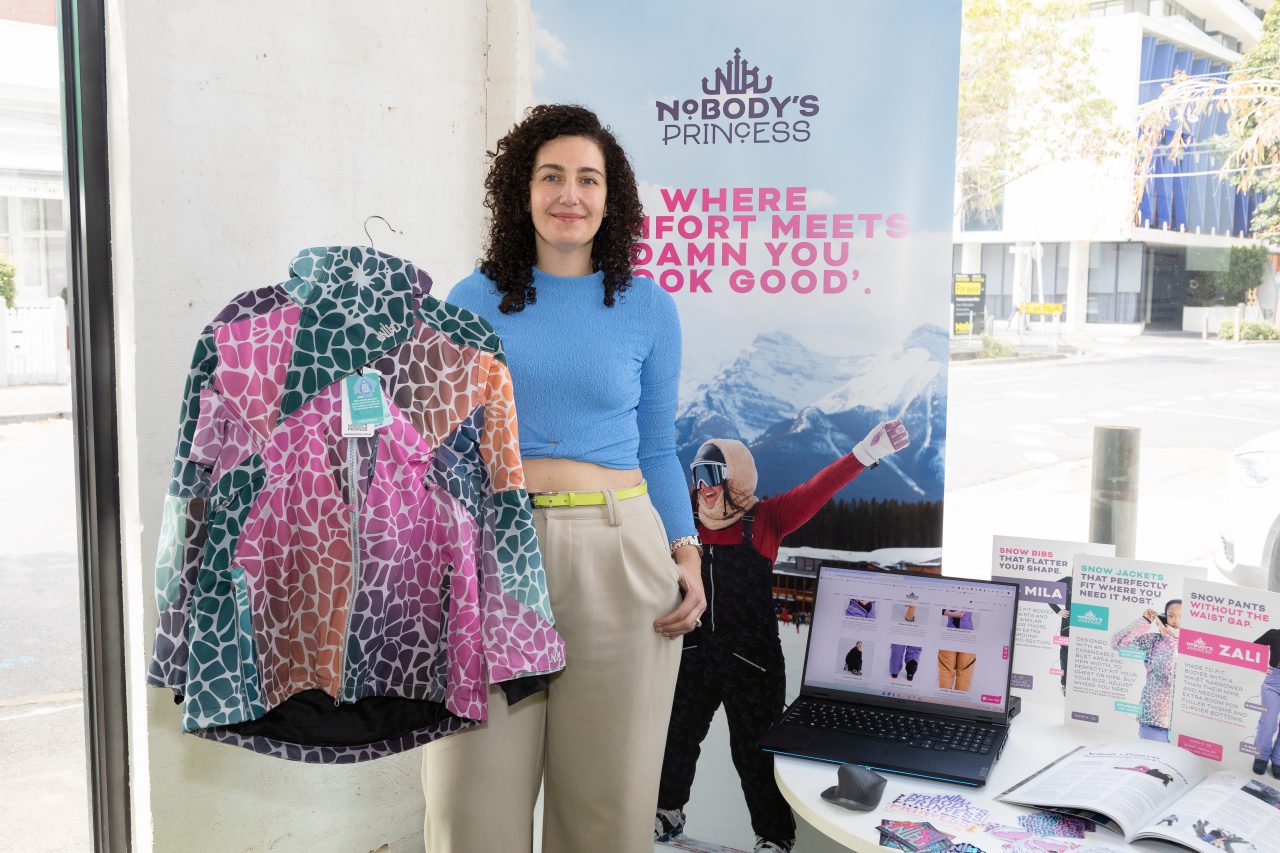
How Maria Baker transformed personal frustration into a global movement for inclusivity on the slopes.